Rubber / Metal / Plastic Bonding
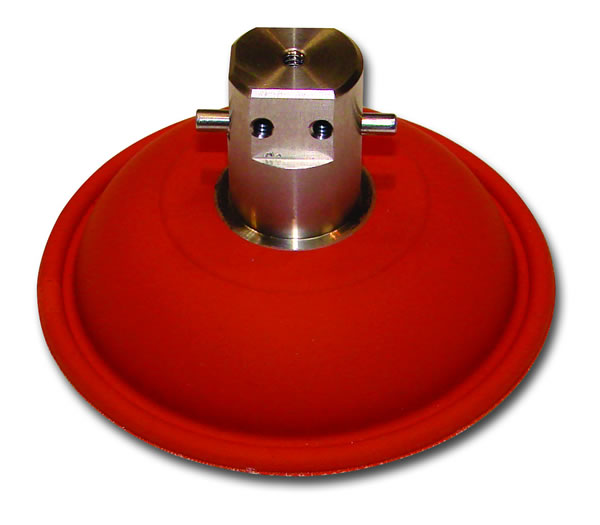
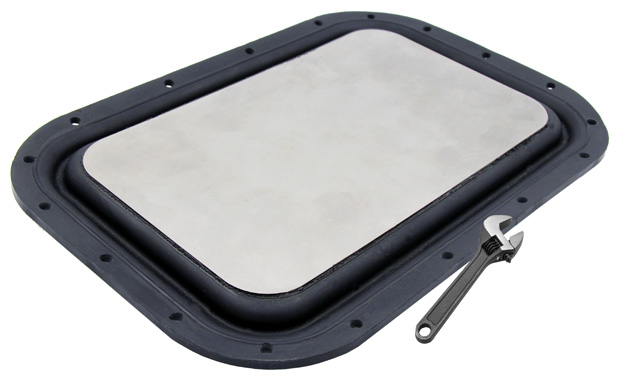
DiaCom has capabilities to bond metal or plastics to diaphragms during the molding process. Mechanical bonding is generally the least expensive and simplest method to achieve. This process is accomplished by designing the insert with projections or holes. During the molding process the insert becomes totally or partially encapsulated by the elastomer, creating a strong mechanical interlock. Figure 1 illustrates a mechanical bond.
Chemical or adhesive bonding utilizes a commercial adhesive applied to the non-elastomeric component. The component is then attached to the elastomer during or after vulcanization depending on the type of required and geometry of the diaphragm. Figure 2 illustrates an adhesive bond.
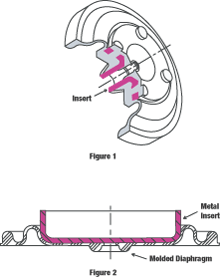 When designing the metal insert, it is recommended to avoid sharp projections extending into the elastomer or sharp corners at the junction line between the two materials.
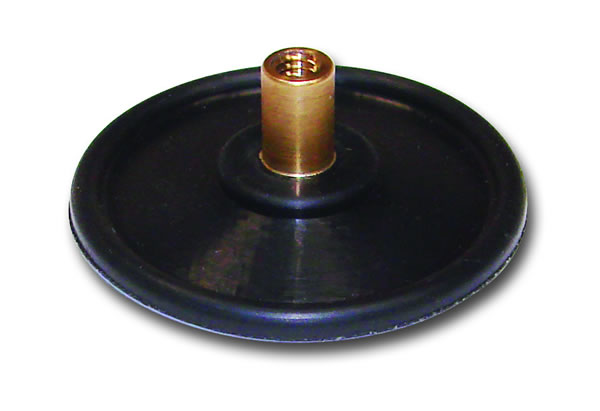
Steel is the most prevalent insert material used, but brass, stainless steel, aluminum, and nylon are also used. Certain elastomers and insert materials can also develop a cohesive bond through molecular attraction. This is most commonly accomplished with the use of brass and sulfur-cured nitrile.
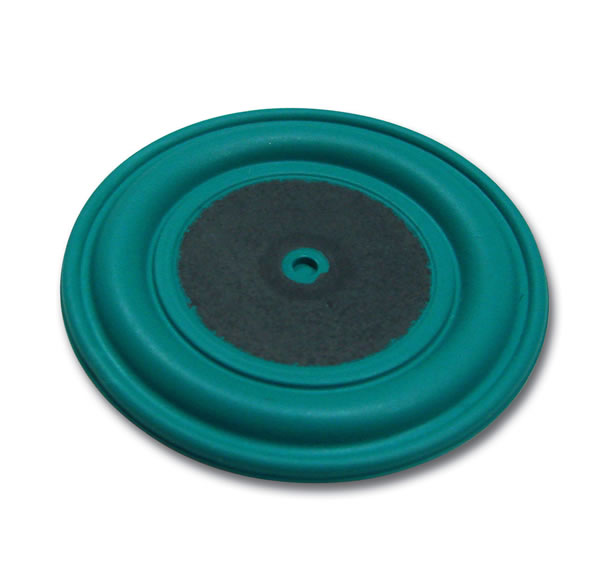
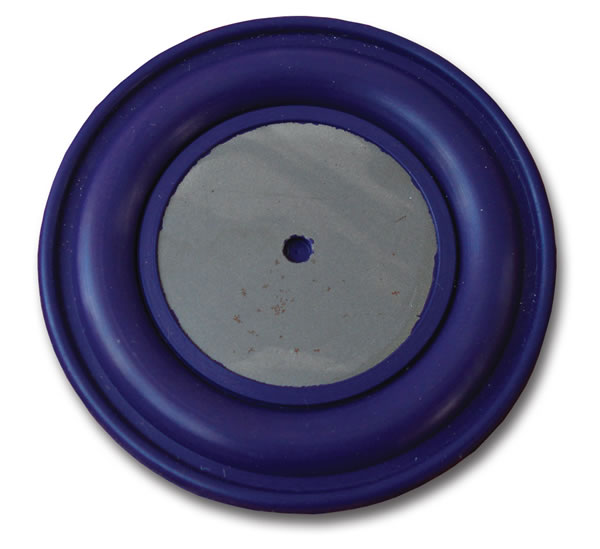
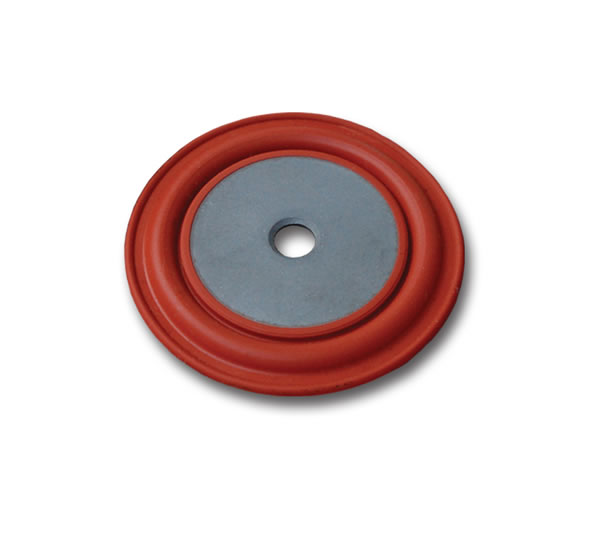
By bonding inserts to diaphragms, costly assembly operations can be reduced or eliminated. Additionally, rivet, screw or other fastening methods which might create leakpaths through the diaphragm would be eliminated with a bonded insert.
DiaCom is a leading international provider of innovative, cost-effective molded diaphragm solutions critical to the operation of essential systems and equipment in industrial, automotive, aerospace, medical instrumentation, and food and water processing applications. The company's reputation for excellence is based on superior quality in the design, manufacturing and application of its high-performance, state-of-the-art, fabric-reinforced and homogeneous elastomeric diaphragm seals.
For Product Inquiries & Information Only:

